Heatless desiccant air dryer key components and applications
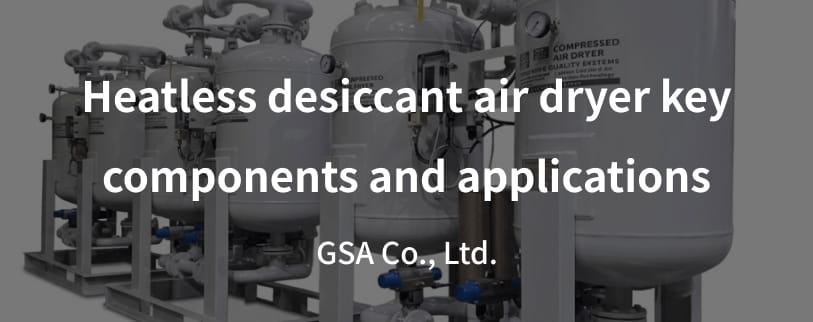
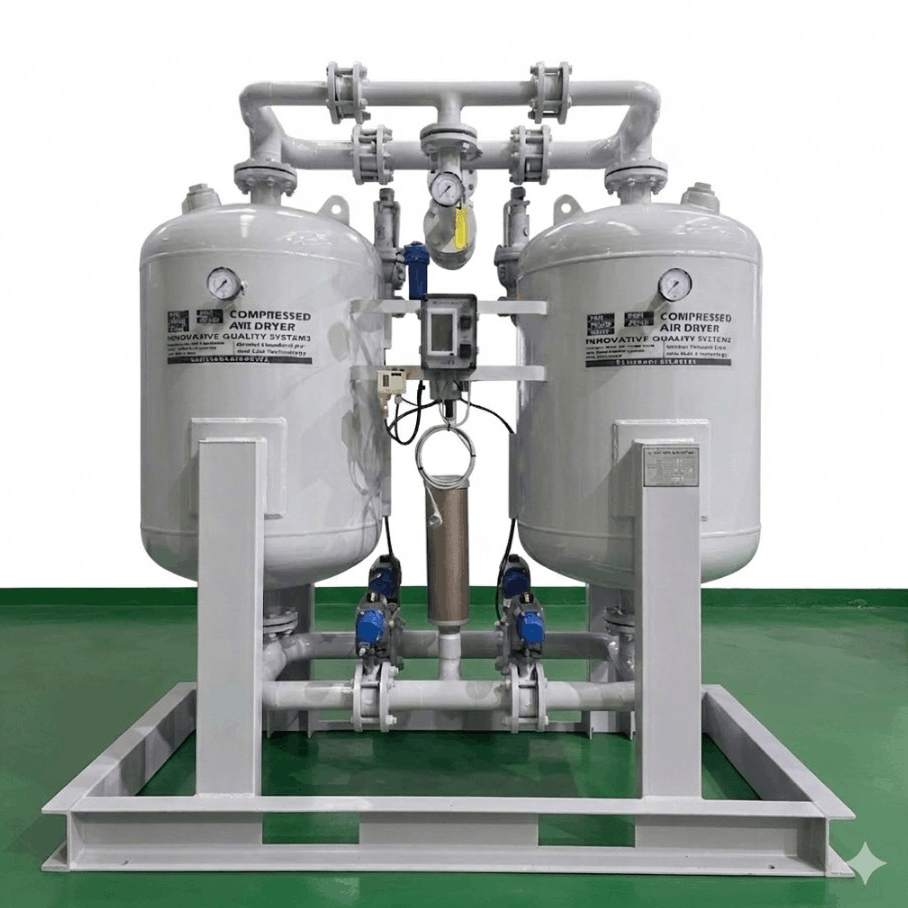
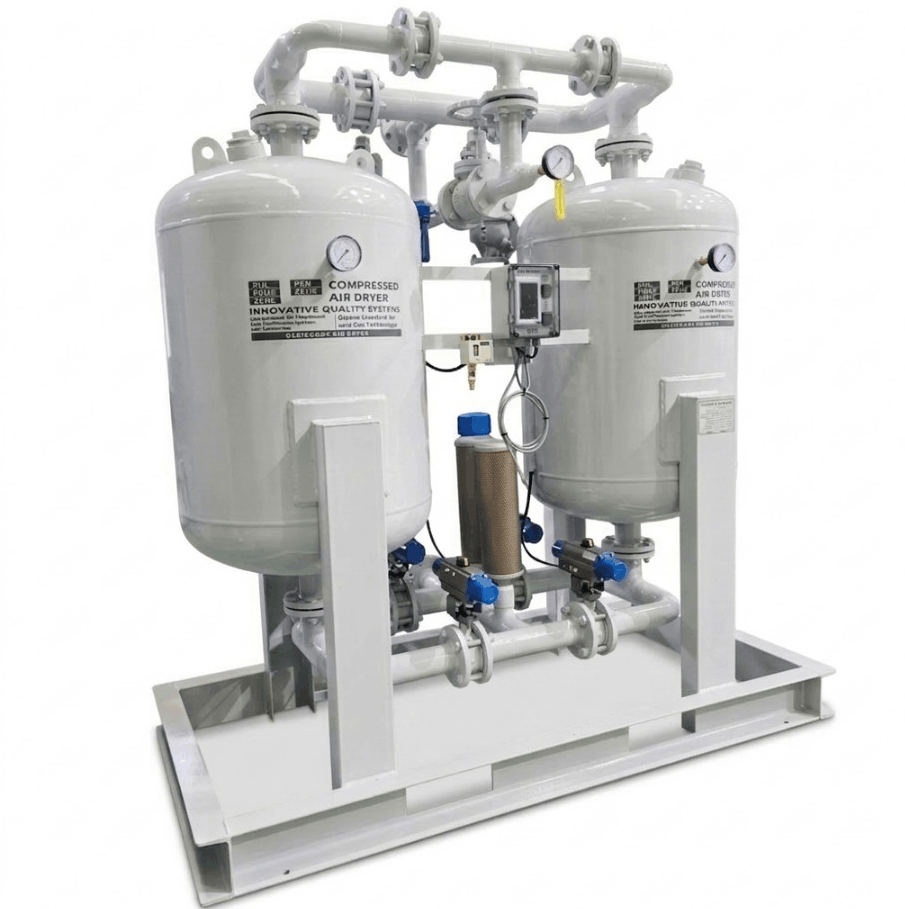
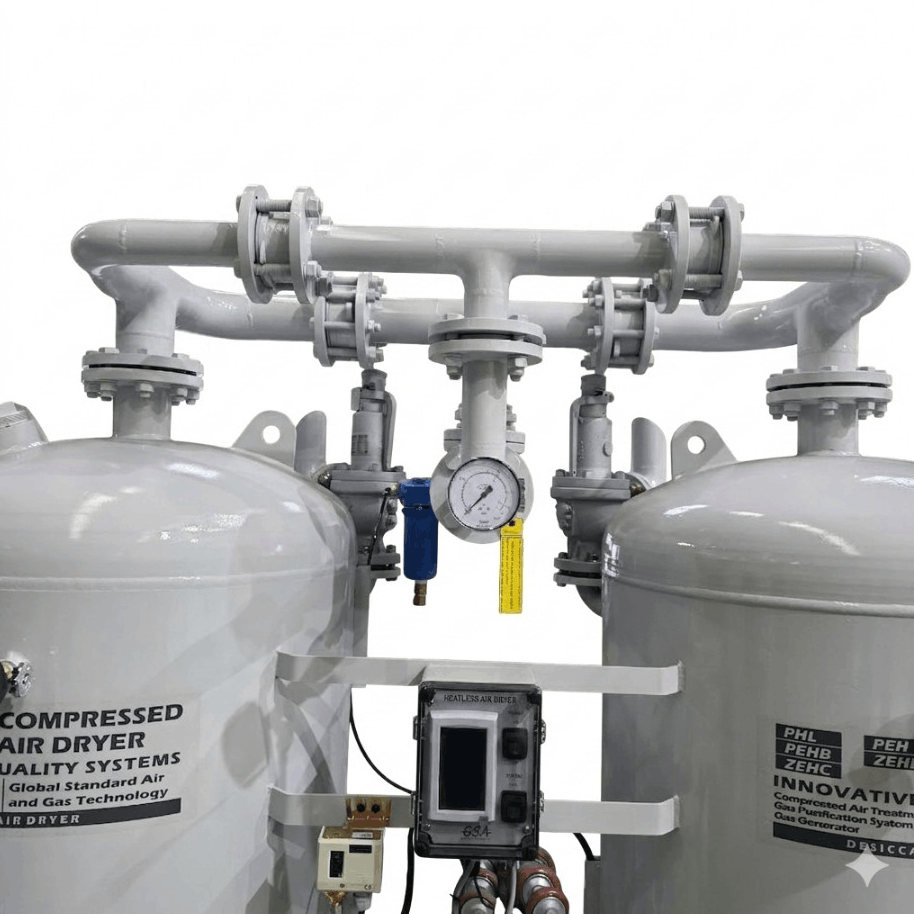
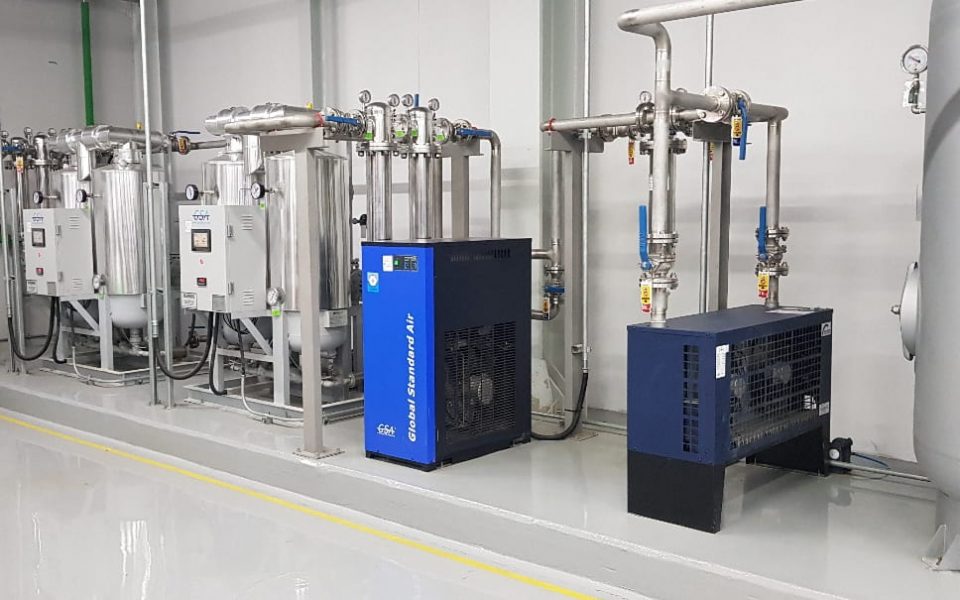
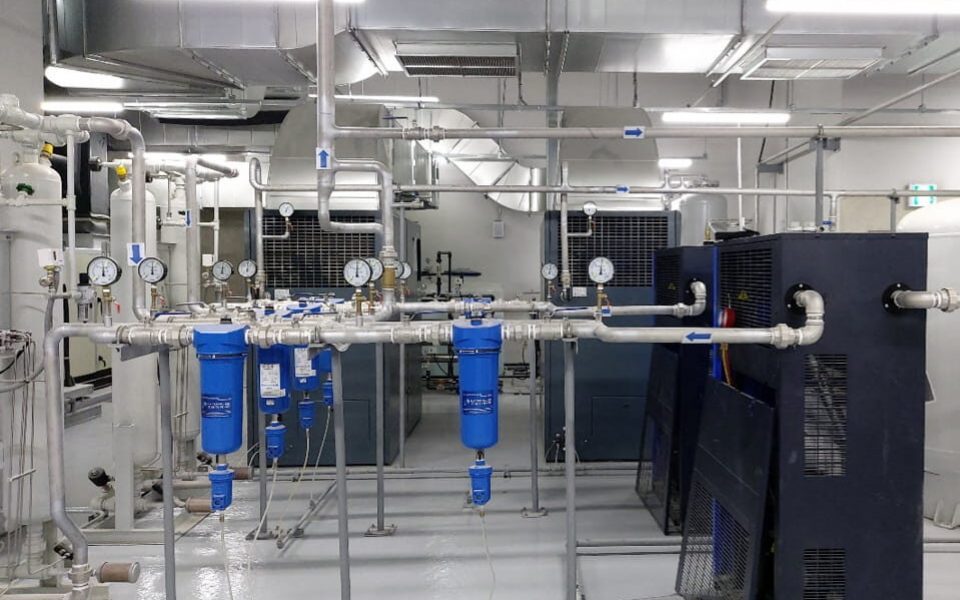
GSA heatless desiccant air dryer unit

What is a Heatless Desiccant Air Dryer?

Today, we will take a closer look at the Desiccant Air Dryer, a core product of GSA (Global Standard Air/Gas), specifically focusing on the heatless type.
Among desiccant air dryers, the Heatless type is a system that regenerates the desiccant using only a portion of the compressed air, without any external heat source. It is essential for precision processes, semiconductor manufacturing, and food production lines where the Dew Point must be lowered to -40℃ or below.
This type of dryer utilizes the PSA (Pressure Swing Adsorption) principle, where two Desiccant Towers alternately repeat the ‘Adsorption’ and ‘Regeneration’ processes.
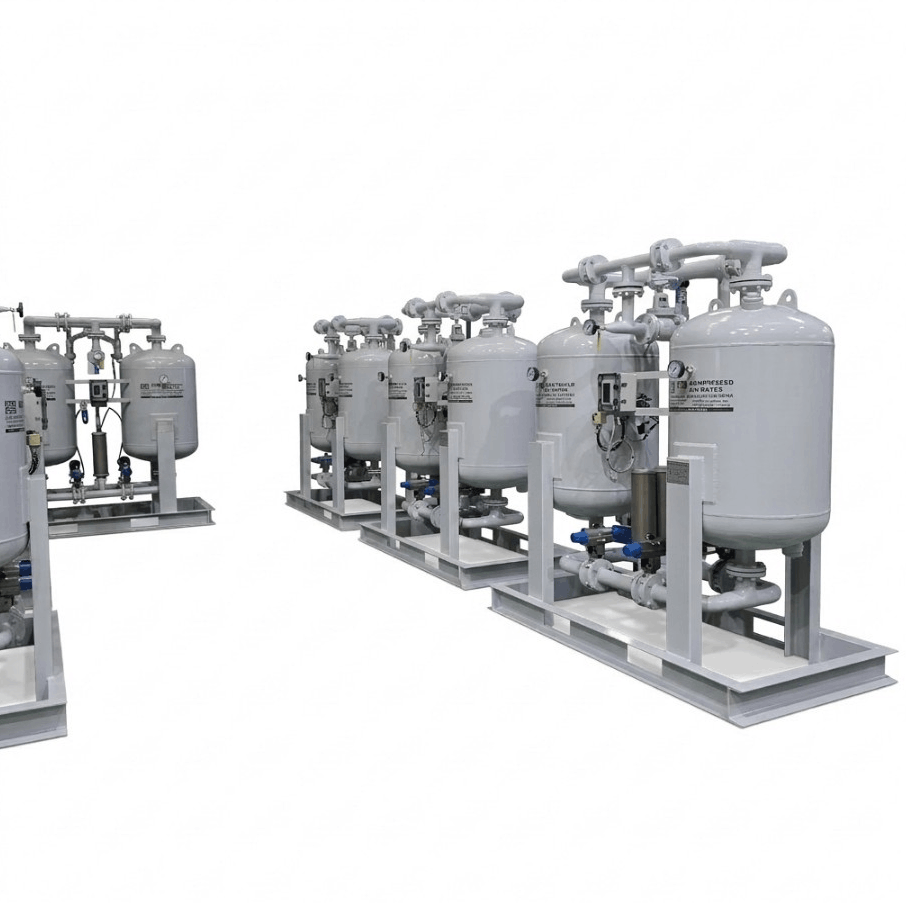
GSA heatless desiccant air dryer units

What is the PSA Working Principle of GSA Heatless Desiccant Air Dryers?

The core of GSA (Global Standard Air/Gas) heatless dryers is the PSA (Pressure Swing Adsorption) process, which consists of three main stages: Adsorption, Regeneration, and Switching.

1. Adsorption Stroke (A-Tower)

Wet compressed air enters the bottom of Tower A and passes through the filled Desiccant (Activated Alumina, Molecular Sieve, etc.). During this stage, moisture adheres to the desiccant beads, and the dried air is discharged from the top to be supplied to the facility.

2. Regeneration Stroke (B-Tower)

Approximately 15–20% of the dry air from Tower A is directed to Tower B through a Purge Control Orifice. At this time, Tower B is depressurized to atmospheric pressure. The dry air picks up the moisture trapped in the desiccant and is exhausted to the atmosphere through a Silencer (Muffler).

3. Switching

After a preset time (typically a 5–10 minute cycle), the Automatic Switching Valve operates to switch roles: Tower A enters the regeneration phase, and Tower B begins the adsorption process again.

What are the Key Components and Roles of GSA Heatless Desiccant Air Dryers?

GSA’s heatless dryers are composed of proven industrial components to ensure precise Dew point control and equipment durability. Each component plays an essential role in the PSA process.

GSA heatless desiccant air dryer desiccant tower

Desiccant tower

Features
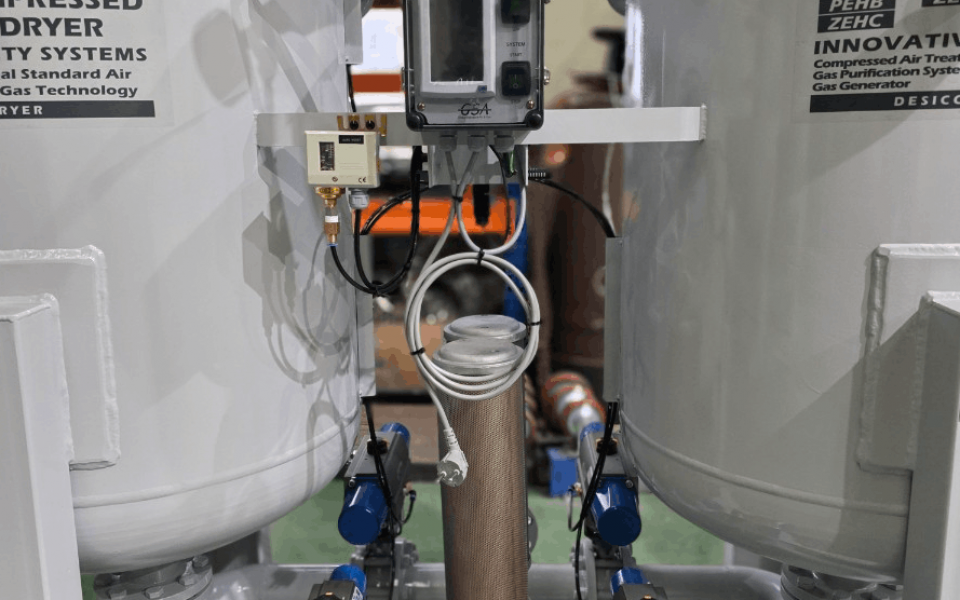
A pressure vessel designed to withstand high-pressure compressed air. They usually consist of a pair of towers.
Role
It provides a physical space to remove moisture from the air by being filled with desiccant.

Desiccant

Activated Alumina
The most widely used material due to its high durability and excellent moisture absorption capacity.
Molecular Sieve
Used when a lower Dew point (e.g., -70 ℃) is required, featuring smaller and more precise particles.
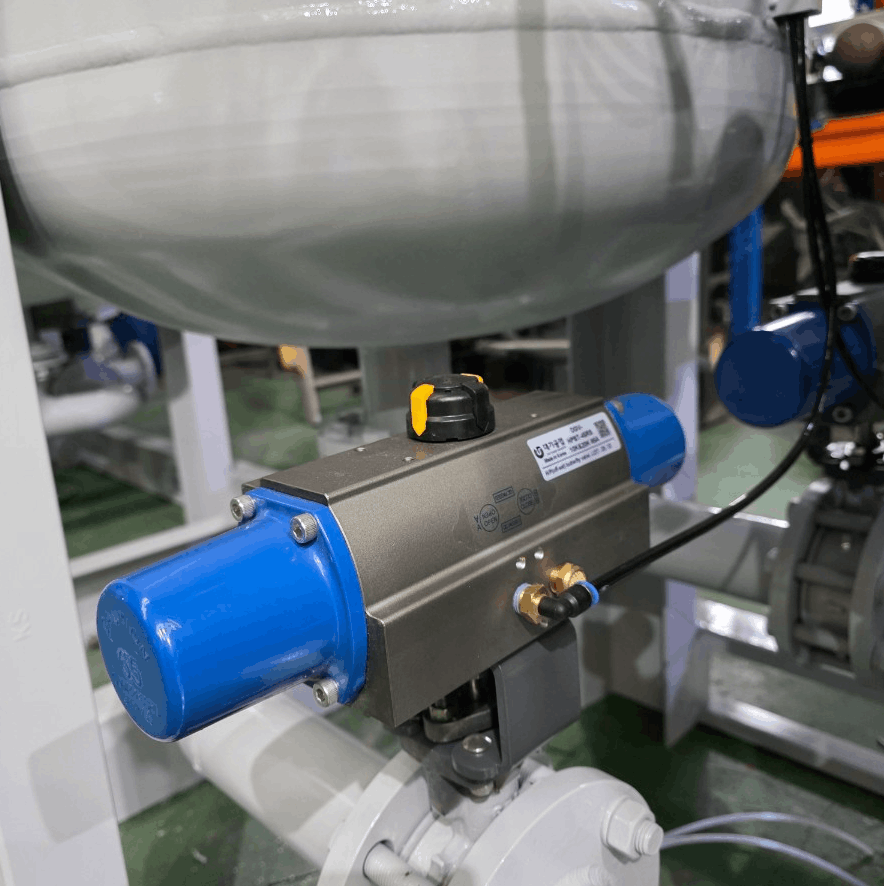
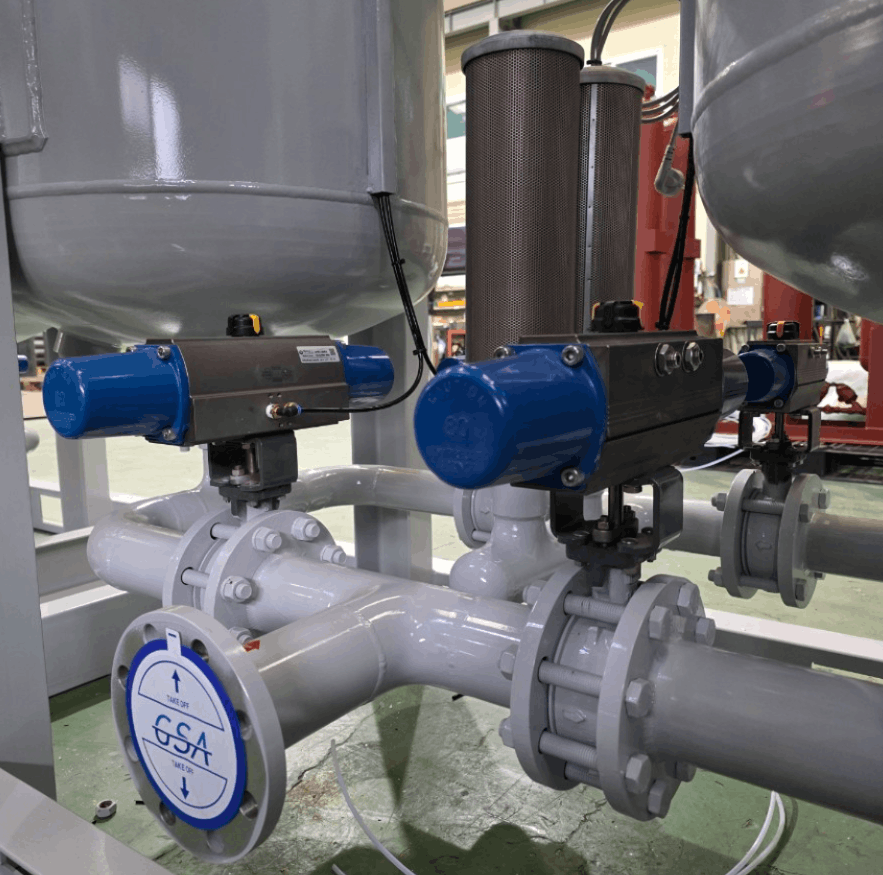
GSA heatless desiccant air dryer inlet & outlet valves

Automatic switching valve (Inlet & Outlet Valves)

Features
Mainly Check valves or air-operated shuttle valves are used.
Role
Based on the Controller (Timer, PCB, or PLC), it accurately switches the air flow from the tower in adsorption to the tower in regeneration.
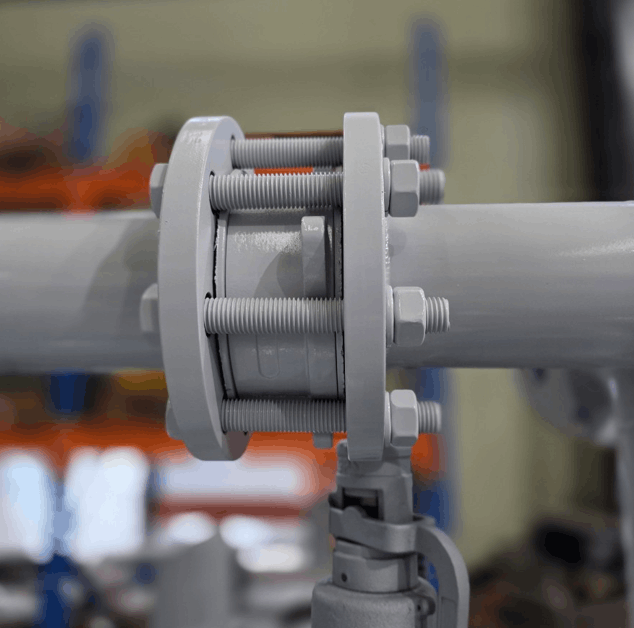
GSA heatless desiccant air dryer purge orifice

Purge control orifice

Features
A metal plate with a precisely engineered small hole.
Role
When diverting a portion of the dried air for Regeneration, it maintains a constant flow rate to determine the overall regeneration efficiency.
GSA heatless desiccant air dryer sliencer muffler

Silencer / Muffler

Features
It reduces the noise generated during the rapid depressurization (Blow-off) of the tower after the Regeneration process is complete.
Role
It prevents noise pollution in the working environment. Periodic maintenance is required because if the internal filter becomes clogged, the Regeneration efficiency may decrease.
GSA heatless desiccant air dryer check valves

Check valve

Features
Ensures air flows in only one direction, preventing any backflow.
Role
Installed on the outlet side, it prevents significant loss of air by stopping the flow from the tower in Adsorption to the tower in Regeneration.
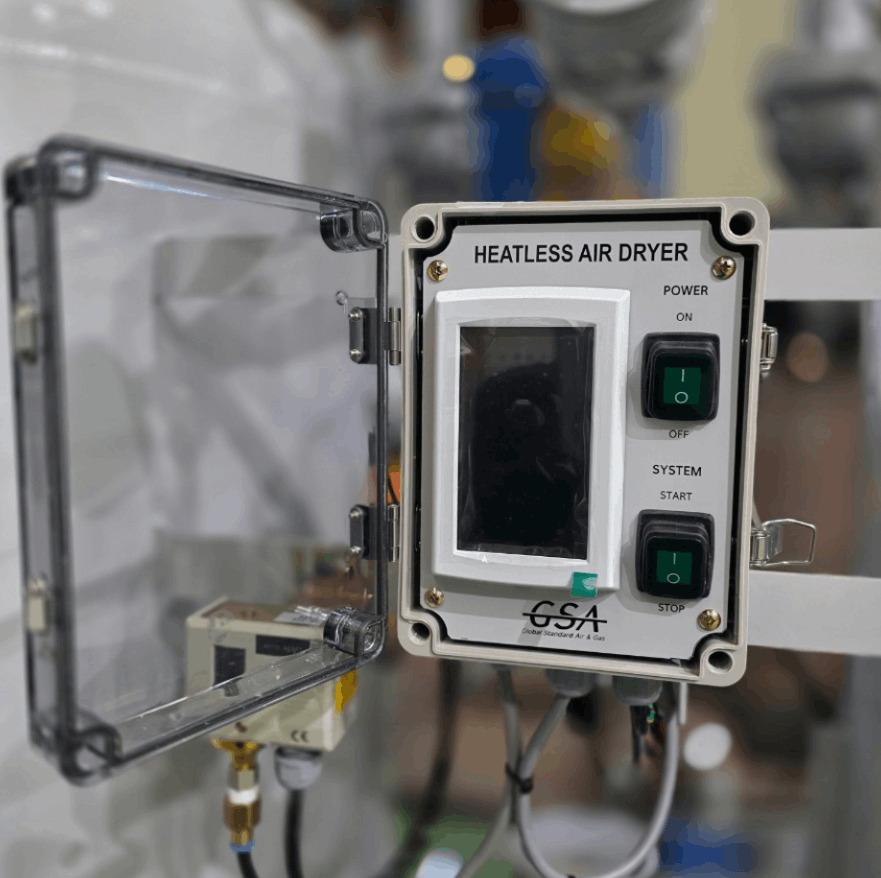
GSA heatless desiccant air dryer controller

Controller (PCB or PLC)

Features
Available in timer-based or Dew point sensor interlocked types.
Role
It manages the drying cycle by regulating the opening and closing timing of the valves. Recently, energy-saving functions like Dewpoint Dependent Switching (DDS) have been integrated to extend the cycle based on moisture levels.
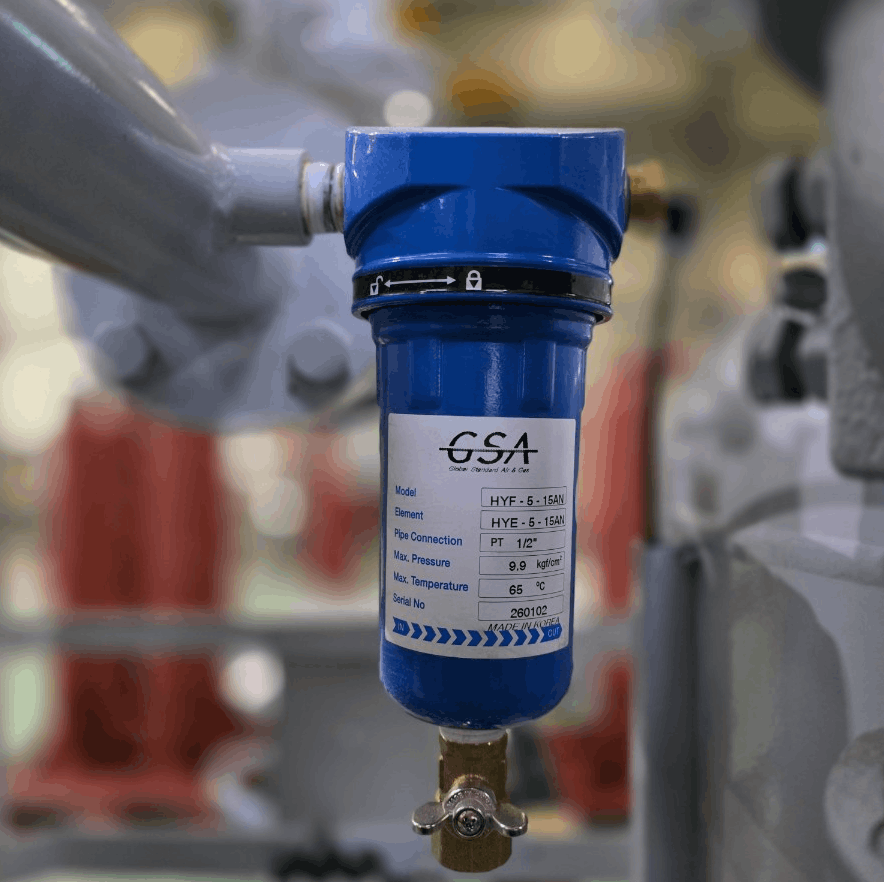
GSA heatless desiccant air dryer's line air filter

Line air filter

Function and Benefits
It plays a crucial role in extending the equipment’s lifespan by preventing rust, breakdowns, and malfunctions caused by contaminants within the pneumatic lines.
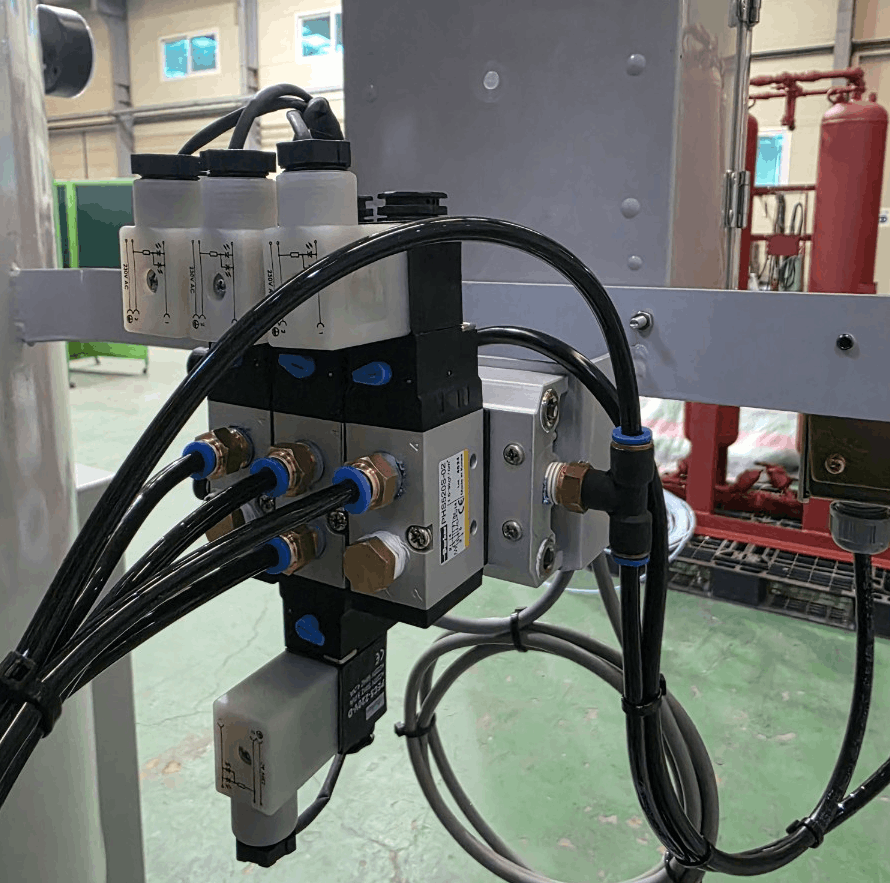
GSA heatless desiccant air dryer's solenoid valve

Solenoid valve

Function and Role
A key automation component that switches the compressed air flow path between the two desiccant towers and controls the purge air.
It receives signals from the Controller to switch the air flow, ensuring that the two towers alternately perform the Adsorption (drying) and Regeneration processes.
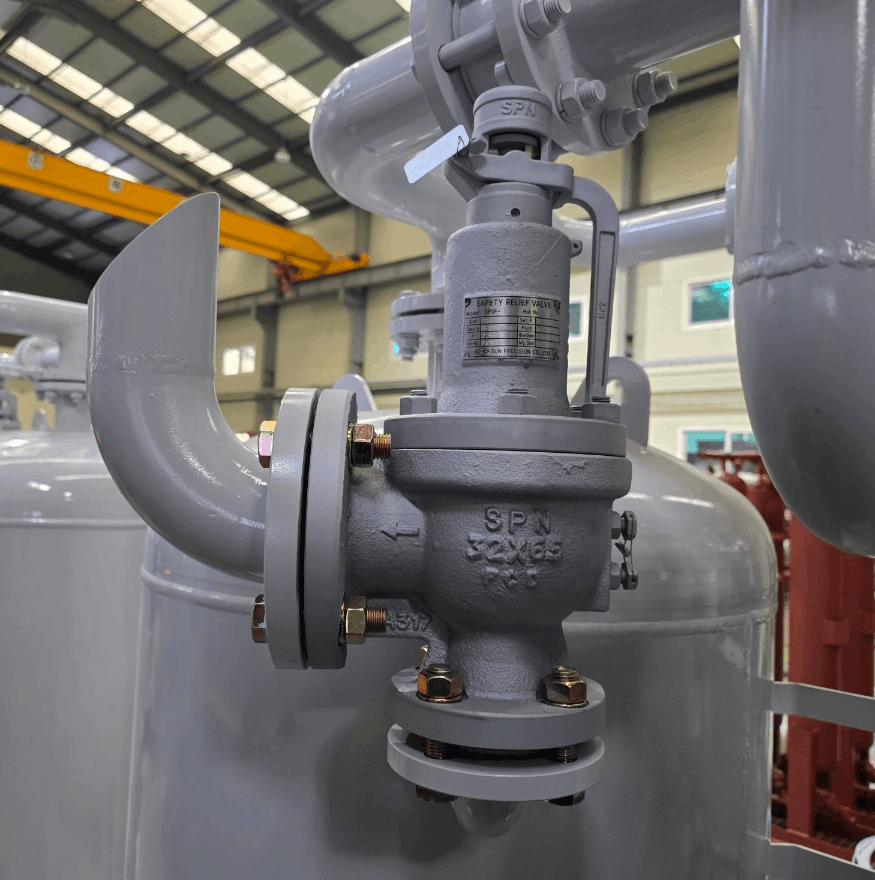
GSA heatless desiccant air dryer's safety valve

Safety valve

The Safety valve is an essential safety device that protects vessels and piping by automatically discharging air to the atmosphere when the pressure in the compressed air system exceeds the allowable limit (design pressure).

Overpressure Prevention (Tank Rupture Prevention)
Since desiccant dryers handle high-pressure compressed air, if the pressure within the Adsorption tower rises above the set point during operation, the valve opens to release internal air, preventing accidents such as tank or piping ruptures caused by overpressure.
Ensuring Safety During System Failure
If pressure continues to build up in one tower due to a failure of control valves (Inlet/Outlet valves), it immediately provides pressure relief to prevent equipment damage or accidents.
Operating Pressure Maintenance and Protection
By preventing abnormal pressure spikes beyond the set limit, it maintains the structural stability of the desiccant and the overall dryer system.
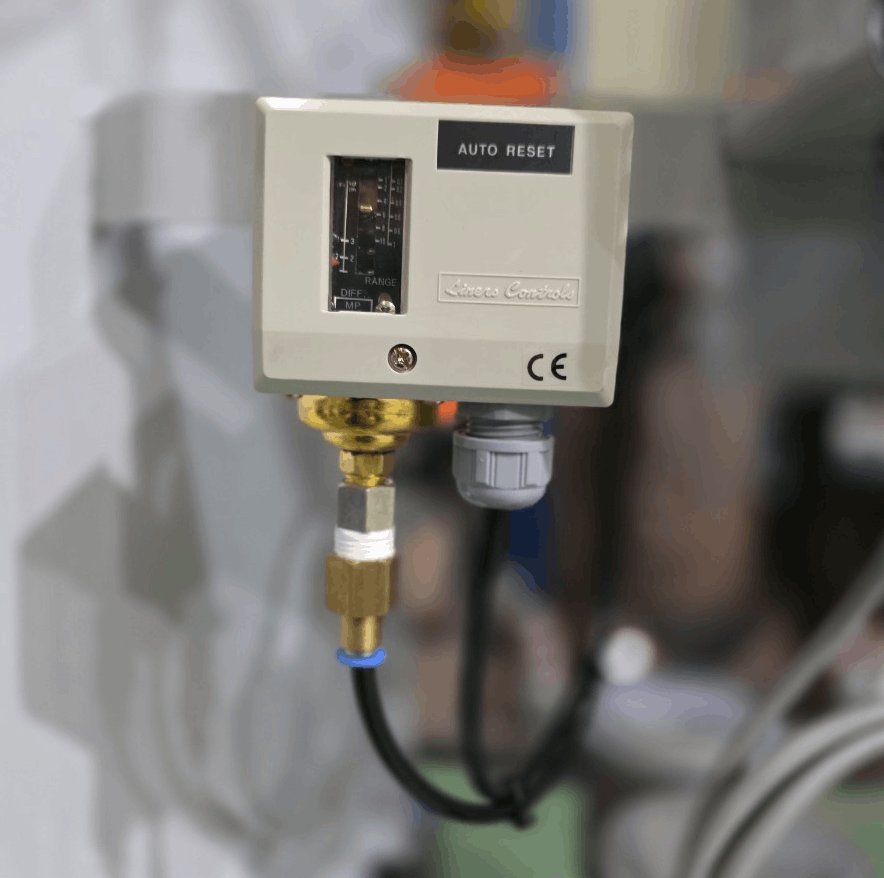
GSA heatless desiccant air dryer's pressure switch
 

Pressure switch

The Pressure switch plays a key role in maintaining stable dehumidification performance and protecting the equipment.
System Abnormal Pressure Detection
If the compressed air pressure drops below the set range during operation, it detects the drop and either stops the dryer’s operation or triggers an alarm.
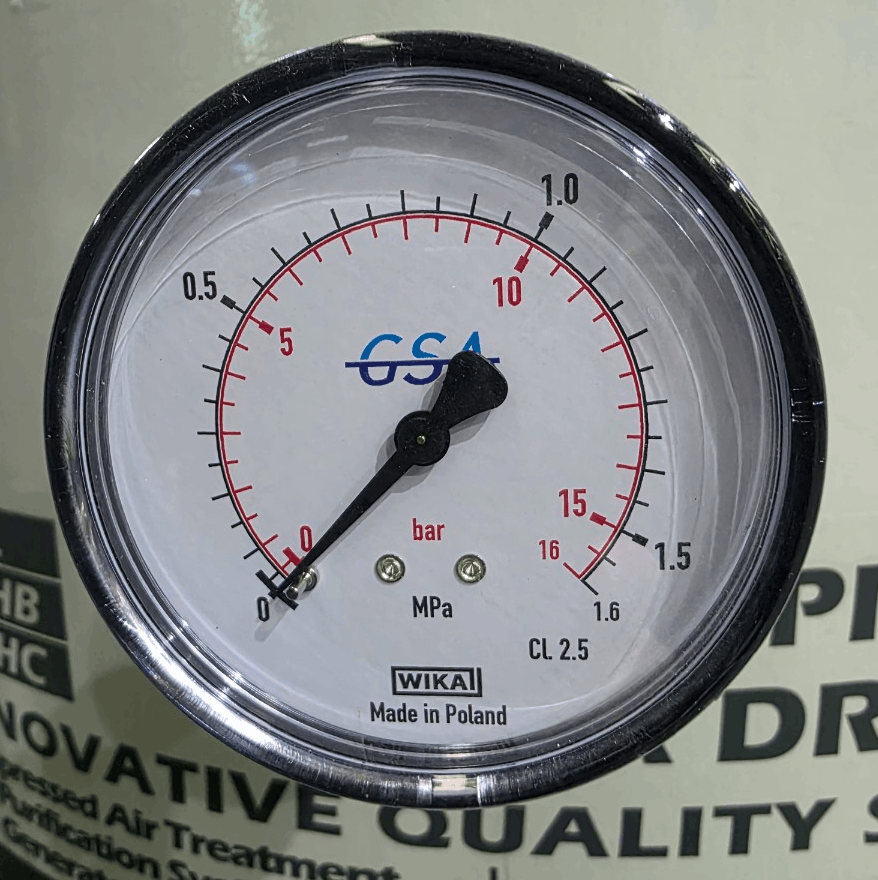
GSA heatless desiccant air dryer's pressure gauge

Pressure gauge

The Pressure gauge is a key safety and operational device used to visually verify the normal operation of the dryer and ensure the quality of the dried air.
Real-time Monitoring of Operational Status
Typically installed on both Tower A and Tower B, it provides real-time information such as “which tower is currently in adsorption, whether regeneration is occurring properly, and whether there are any leaks or clogs in the system.”

In which industrial applications is a Heatless desiccant air dryer essential?

A Heatless desiccant air dryer is an indispensable solution for the following industrial environments:

Precision Manufacturing and Processing Industry

When compressed air comes into direct contact with products or drives precision instruments, an Extremely low Dew point (-40 to -70°C) is required.
Semiconductors and Displays
Prevents circuit corrosion or contamination caused by moisture in micro-processes within cleanrooms.
Laser Cutting
Uses ultra-dry air to prevent beam scattering and lens contamination during high-power laser processing.
Precision Painting
Perfectly blocks moisture that causes defects like bubbles or paint lifting during automotive or home appliance painting processes.

Automation Equipment and Instrumentation Control

Protects the control devices that act as the “nervous system” of the entire plant.
Pneumatic Valves & Cylinders
The presence of moisture can cause internal component corrosion or freezing during winter, leading to operational failure.
Solenoid valve
Prevents sticking caused by moisture accumulation in fine passages, thereby increasing the equipment’s overall operation rate.

Food & Pharmaceutical Industry

As a field directly linked to hygiene, Bacteria Growth Inhibition is the core requirement.
Powder Transfer (Pneumatic Conveying)
When pushing flour, sugar, or pharmaceutical powders with compressed air, the presence of moisture causes clumping, which leads to pipeline blockages.
Product Packaging
By controlling the humidity inside packaging containers, it ensures an extended shelf life and maintains product freshness.

Special Environments and Outdoor Installations

The true strength of a Desiccant Air Dryer is demonstrated in environments that a Refrigerated Air Dryer cannot handle.
Cold Regions & Outdoor Piping
For piping exposed to sub-zero temperatures, a refrigerated dryer (with a Dew point of around 4°C) alone cannot prevent internal freezing. Therefore, a Desiccant Air Dryer must be used to lower the Dew point significantly.
Plants & Shipbuilding
Used in environments where a stable supply of Dry compressed air is critical to operations, such as inside vessels or at gas plants.

The advantages of Heatless desiccant air dryers include a simple structure that minimizes breakdowns, low initial investment costs, and the inherent safety required for operation in explosion-proof hazardous areas.

The primary disadvantage is the consumption of approximately 15% of the total compressed air for desiccant regeneration (purge air), which leads to an increase in overall operational and energy costs.


This concludes our overview of Heatless desiccant air dryers for today.

Stay tuned for more technical insights into compressed air treatment systems.

Customer Satisfaction
Contact information
Thanks a lot!